


Hormonal changes can affect the hair-growth cycle, but they are not the only explanation for hair loss in women. Genetics, illness, iron deficiency, medicines, weight loss, stress and inflammatory scalp conditions can all produce thinning or shedding. The pattern and speed of the change are often more informative than assuming one hormone is responsible.
Female pattern hair loss is the most common form of hair loss in women. It usually develops gradually, with a wider central parting and reduced density over the top of the scalp while the frontal hairline often remains in place. The British Association of Dermatologists describes both genetic and hormonal factors, although many affected women do not have raised androgen levels.
How hormones fit into female hair loss
Each follicle moves through growth, transition and resting phases. A major physical change can move more follicles than usual into the resting phase, leading to diffuse shedding several months later. This is called telogen effluvium. It differs from the gradual follicle miniaturisation seen in female pattern hair loss.
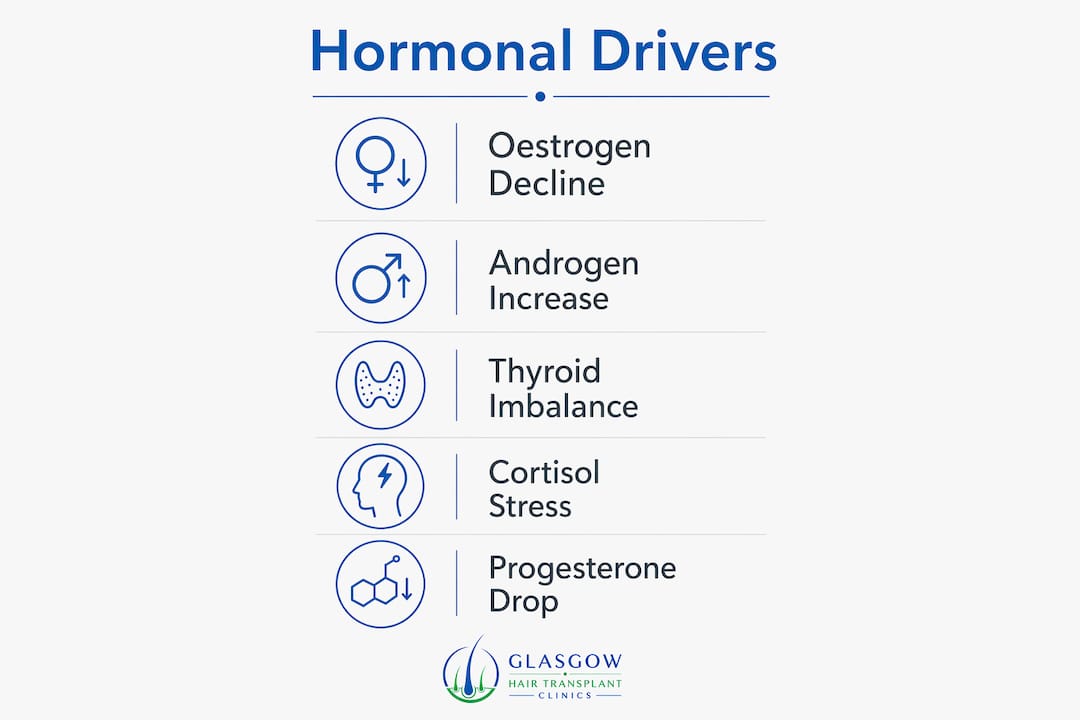
Hormones are particularly relevant when hair loss appears alongside other changes:
- Polycystic ovary syndrome (PCOS): female pattern hair loss can occur with androgen excess. Irregular periods, acne, increased facial or body hair and difficulty becoming pregnant are reasons to speak to a GP.
- Perimenopause and menopause: thinning is more common in later life, but age, genetics, health and medicines can overlap. Menopause should not be assumed to be the sole cause.
- Thyroid disease: both an underactive and an overactive thyroid can be associated with diffuse loss. Thyroid testing is useful when the history or other symptoms suggest it.
- Pregnancy and childbirth: increased shedding often begins after childbirth. This is usually telogen effluvium and commonly improves as the hair cycle settles.
- Changes to medicines: some medicines and changes to hormonal treatment can alter shedding. Ask the prescriber to review the timing rather than stopping a medicine without advice.
Stressful events can also trigger telogen effluvium. This does not make cortisol the routine first test, nor does stress explain every case of diffuse loss. The medical history and scalp examination come first.
The pattern and pace of change matter
Gradual thinning through the central parting or crown, with a normal-looking scalp, is typical of female pattern hair loss. Telogen effluvium tends to cause a more sudden increase in shedding from across the scalp, often around three months after illness, surgery, childbirth, marked weight loss or another major physical or emotional stress.
Smooth round patches may indicate alopecia areata. Redness, scale, pain, burning, a smooth or shiny area, eyebrow loss or recession in a band around the frontal hairline can point to another condition that needs medical assessment. The clinic's guide to types of alopecia explains why patchy, diffuse and scarring patterns are assessed differently.
Which blood tests may be useful?
There is no single female hair-loss panel that everyone needs. Diagnosis begins with the duration and pattern of loss, recent health changes, menstrual history, medicines, diet, family history and examination of the scalp.
NICE advises considering thyroid function, a full blood count, ferritin and vitamin D, particularly when telogen effluvium is suspected. Tests for androgen excess may be appropriate when hair loss occurs with irregular periods, acne, increased facial hair or other features of PCOS. Dermoscopy and, less commonly, a scalp biopsy may be needed when examination does not give a clear diagnosis.
Ferritin has no universal hair-growth target
Ferritin is used to assess iron stores, and iron deficiency can contribute to diffuse shedding. Claims that every patient needs a ferritin result of 70 or 100 micrograms per litre for hair growth are not based on an agreed clinical threshold. Results must be interpreted with the laboratory range, full blood count, symptoms and factors such as inflammation, which can raise ferritin.
Do not start iron supplements solely because of an online hair-loss target. A GP can confirm whether iron deficiency is present, investigate its cause and advise on treatment.
Treatment follows the diagnosis
When shedding is linked to illness, iron deficiency, thyroid disease, a medicine or another identifiable trigger, treatment focuses on that cause. Telogen effluvium usually improves without a hair-growth medicine, although it can take months for the previous volume to return.
Topical minoxidil may slow female pattern hair loss and produce partial regrowth in some women. It usually needs at least six months before benefit can be judged, and any benefit lasts only while treatment continues. Scalp irritation and a temporary increase in shedding can occur.
Topical minoxidil should not be used during pregnancy or while breastfeeding. The British Association of Dermatologists also advises avoiding it when planning a pregnancy. If you become pregnant while using minoxidil, stop using it and contact your GP or pharmacist for advice.
A dermatologist may sometimes consider low-dose oral minoxidil or an anti-androgen such as spironolactone. These medicines are not licensed for female pattern hair loss in the UK and require individual assessment, monitoring and specific pregnancy precautions. HRT may be prescribed for appropriate menopause symptoms, but it is not a hair-loss treatment and should not be started simply in the hope of reversing thinning.
Wigs, hairpieces and fibre products can provide useful camouflage. Evidence for platelet-rich plasma remains limited, and it should not be presented as a guaranteed way to restart growth. Hair transplantation is considered only for selected women with permanent, stable loss and a suitable donor area. The clinic's hair transplant guide for women explains how suitability and donor supply are assessed.
When to speak to your GP
Arrange a GP appointment if hair loss is sudden, patchy, painful or inflamed, or appears with fatigue, unexplained weight change, irregular periods, increased facial hair or eyebrow loss. Seek advice as well if shedding persists, the scalp is becoming more visible or the change is affecting your wellbeing. NHS guidance recommends establishing the cause before approaching a commercial hair clinic.
This article provides general information and cannot diagnose the cause of hair loss or recommend treatment for an individual reader.
The clinic's hair loss advice hub has more information on common patterns and assessment.
About the author
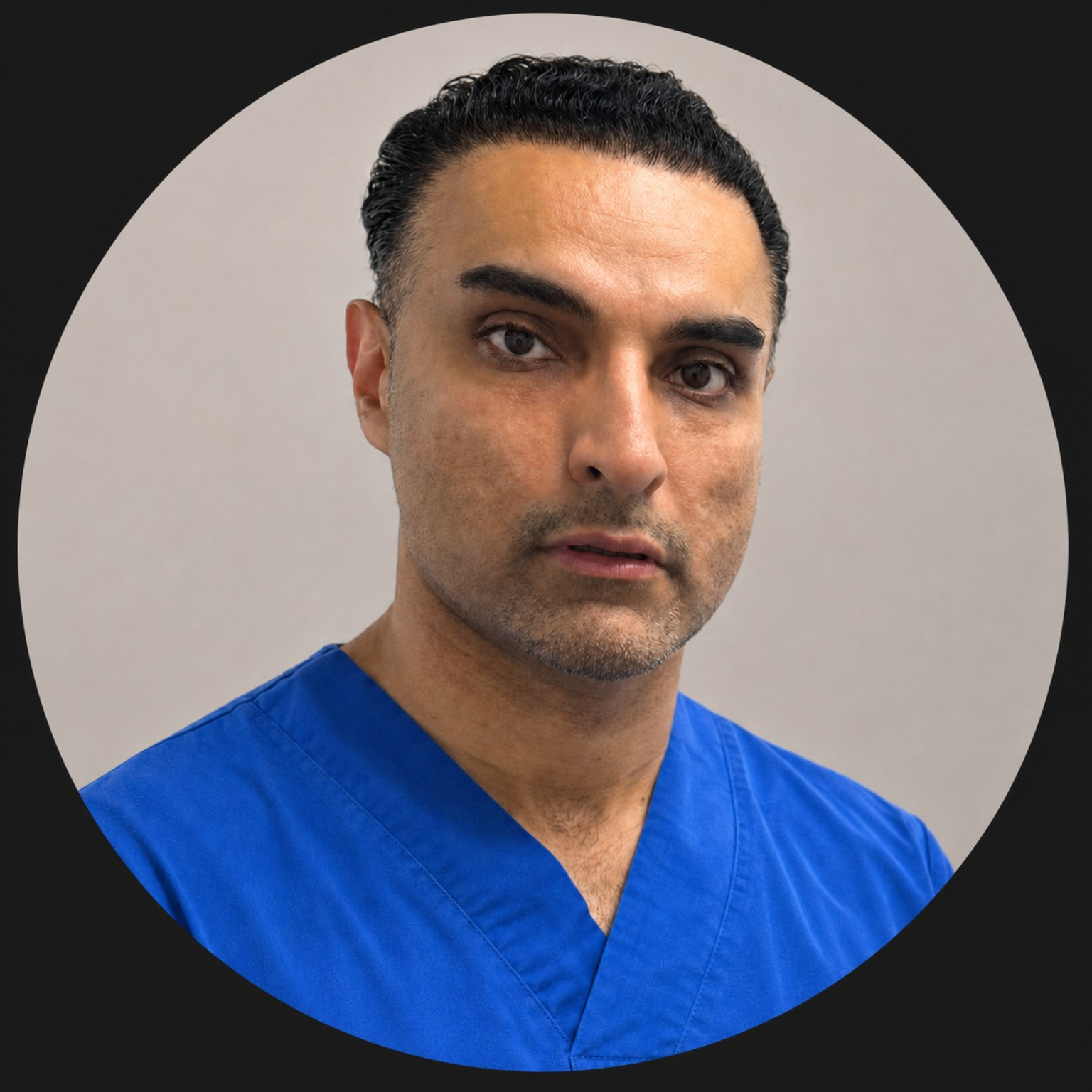
Dr Harpreet Kalra is a GP and hair-transplant surgeon involved in consultation-led treatment planning at Glasgow Hair Transplant Clinics. His assessments consider the cause and pattern of loss, the condition of the existing hair and whether medical or surgical treatment is appropriate.