
FUE Hair Transplant Belfast
FUE moves small groups of hair follicles from the back and sides of the head into areas of permanent thinning. It can be used to restore the hairline, temples or crown when the donor hair is suitable.
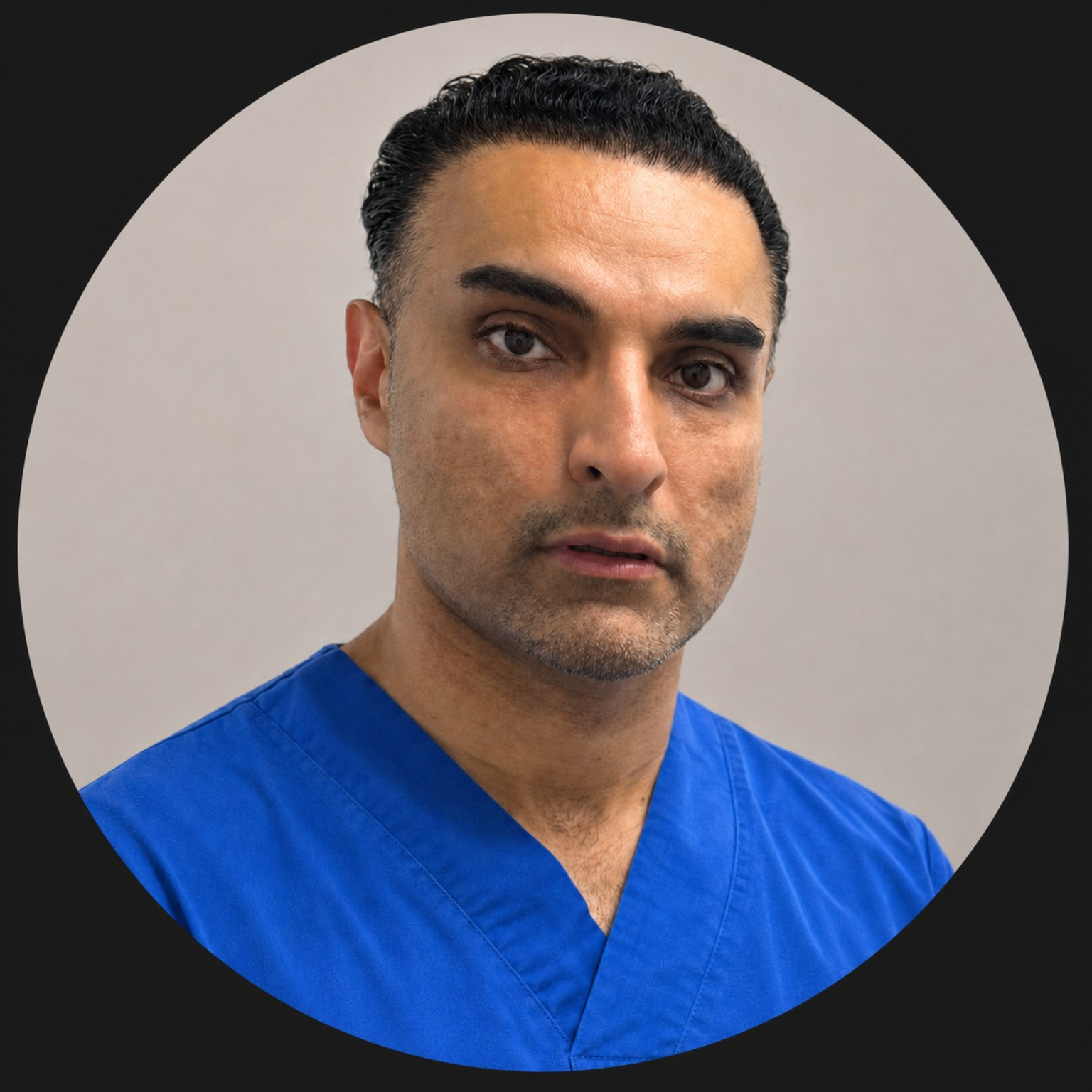
At your consultation, Dr Harpreet Kalra assesses your hair loss and donor supply, explains what surgery could achieve and discusses the likely graft count, cost and recovery.
Request a Consultation


Cost, Recovery and Your Consultation
Published FUE prices: £1,999 for a small 500-graft procedure, £2,999 for 1,000 grafts and £3,999 for 2,000 grafts. Your graft requirement and quotation follow assessment. See the FUE cost examples and our full graft price guide.
Recovery: expect visible extraction sites, small crusts and possible redness or swelling at first. Follow the clinic’s washing and handling instructions during the early healing period. Transplanted hairs commonly shed before new growth develops over the following months. Read the recovery stages and surgical risks.
Your consultation: discuss the areas you would like to restore, your existing hair, previous treatment and donor supply. The plan should explain the proposed coverage and leave room for future hair loss. You can request a consultation before deciding whether to proceed.
What Is a Follicular Unit?
Hair follicles grow in small natural groups called follicular units. Each unit can contain one hair or several hairs.
Fine single-hair grafts help create a soft edge at the hairline. Grafts containing several hairs can add coverage behind that edge or elsewhere on the scalp.
What Can FUE Restore?
FUE grafts can be used at the hairline, temples, mid-scalp or crown. The placement changes with the area: a hairline needs a soft leading edge, while the crown needs to follow the natural whorl.
Frontal recession can be planned around our hairline transplant approach, while vertex thinning requires the different directional planning described on our crown hair transplant page.
Individual extraction can also be used in selected beard and eyebrow restoration procedures, where careful control of graft type and implantation direction becomes particularly important.
FUE Patient Results
These patients had FUE treatment at our clinic. The graft counts and follow-up times belong to each individual case; they do not predict the coverage or result another patient will achieve.
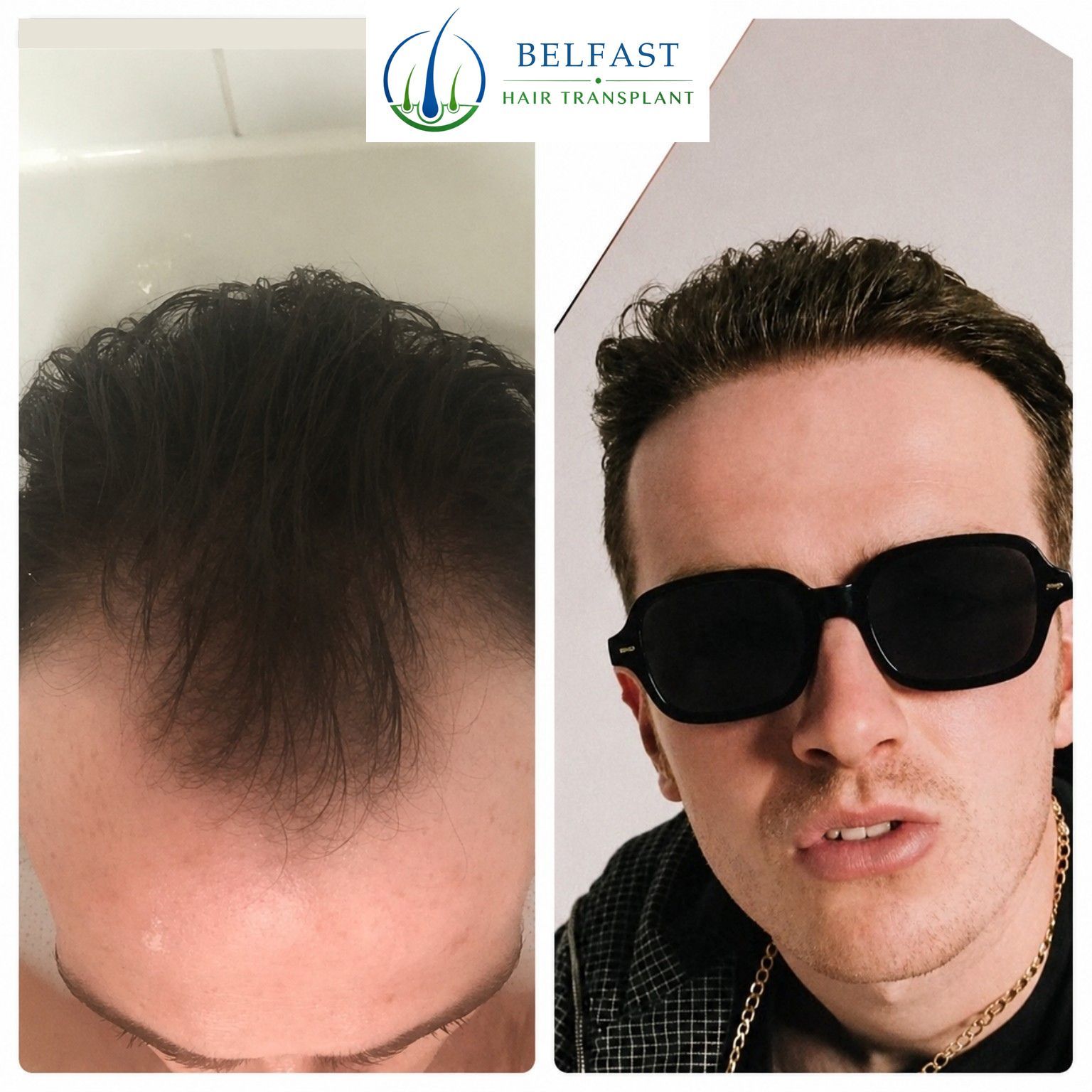
Ryan
2,300 grafts · around 5 months
Ryan’s procedure focused on his receding frontal hairline. These photographs show an early stage of growth at around five months.
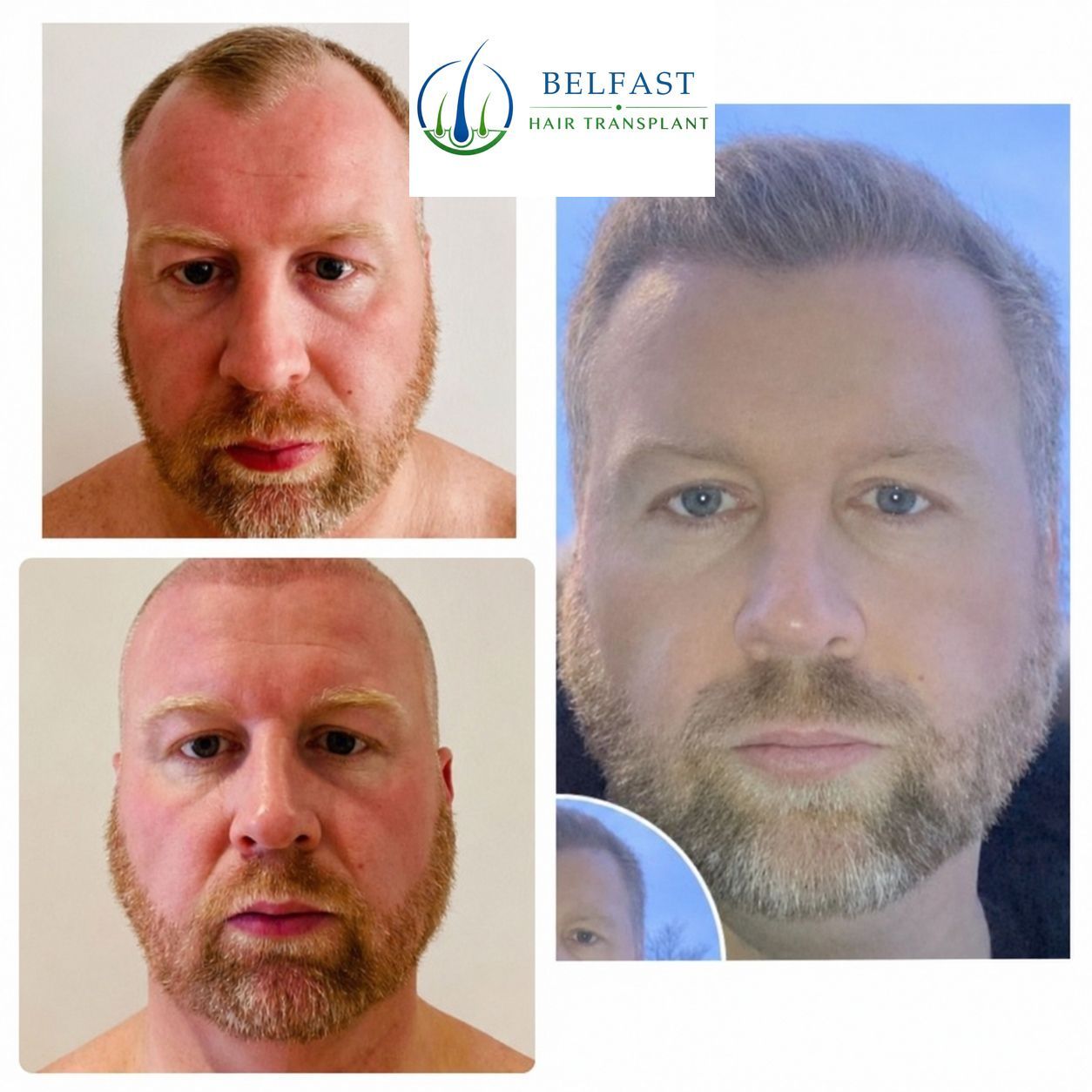
Aaron
2,850 grafts · around 12 months
Aaron was treated across the frontal hairline. His photographs show the result at around twelve months.
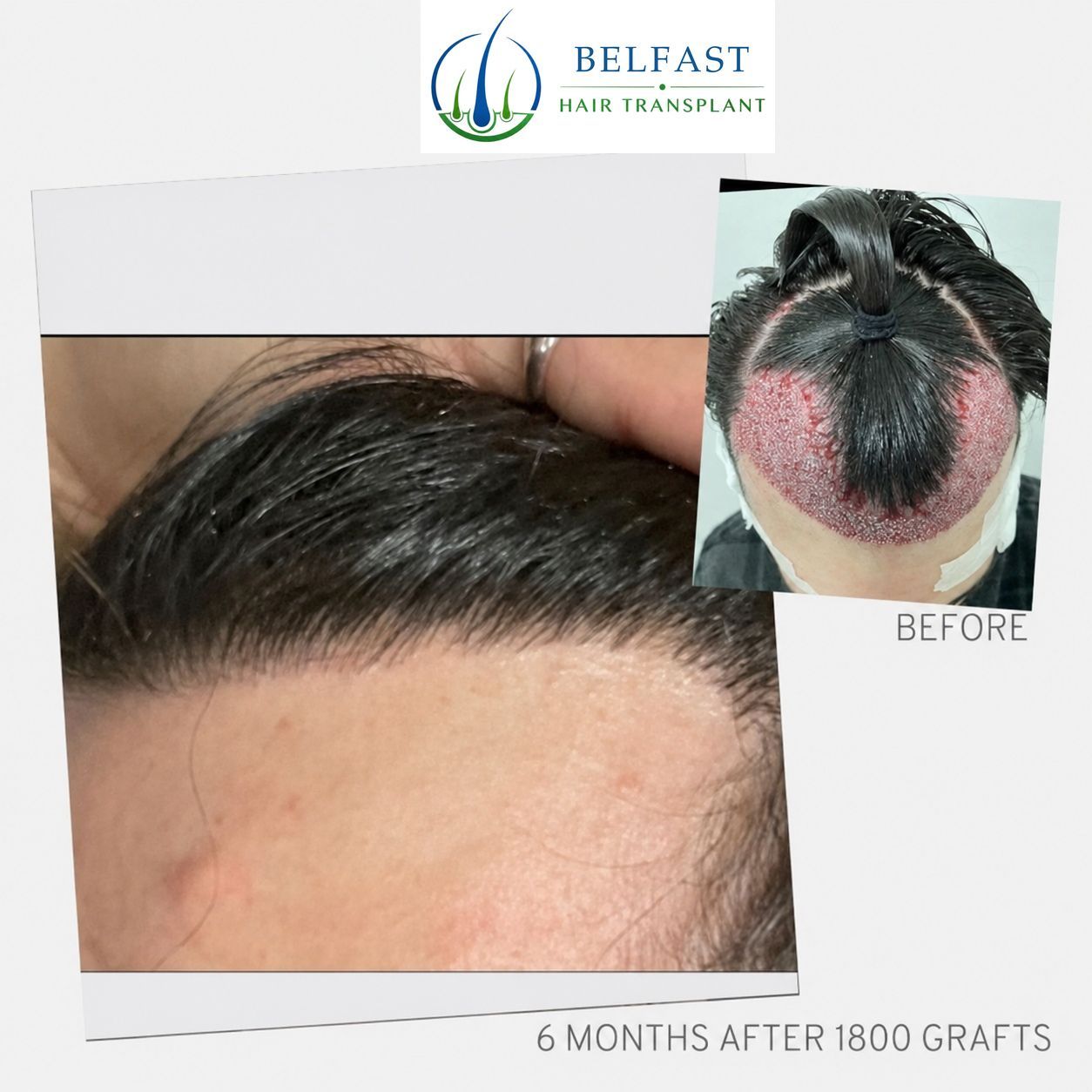
Benjamin
1,800 grafts · around 6 months
Benjamin’s procedure addressed recession at the front and temples. These photographs show progress at around six months.
How FUE Hair Transplantation Works
Donor Assessment
The back and sides of the scalp are examined first. This establishes where grafts can be taken and how much hair should remain after extraction.
The assessment includes hair density and thickness, signs of miniaturisation and any previous transplant surgery. Fine or sparse donor hair may limit the coverage that can be achieved.
Individual Follicular Unit Extraction
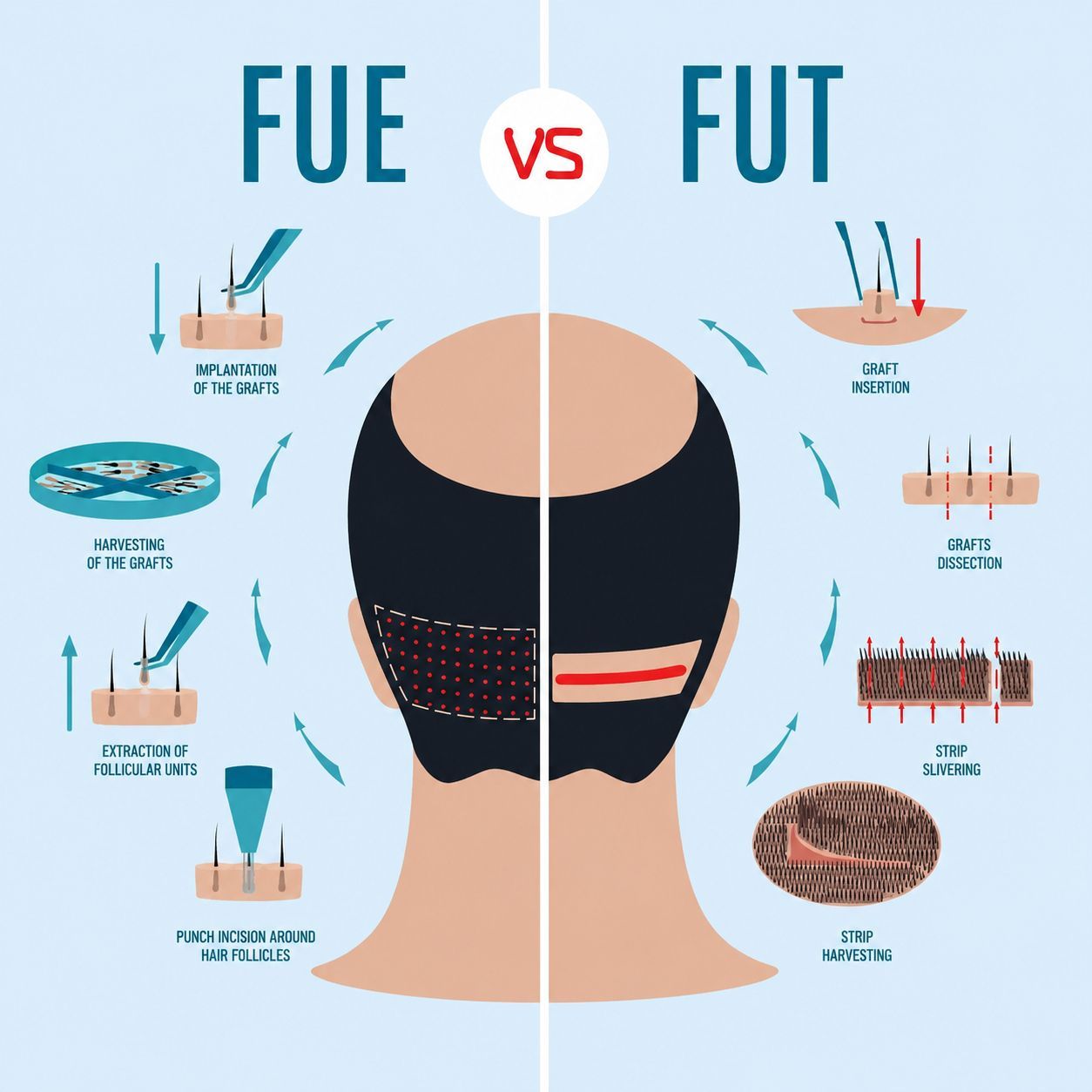
Each selected follicular unit is released through a small circular incision around the follicle and then removed individually.
Follicles do not all run straight down beneath the skin. Extraction needs to follow their direction carefully to reduce the risk of cutting or damaging a graft.
Extraction is spread across the suitable donor area so the remaining hair retains coverage.
Graft Checking and Sorting
Once removed, the follicular units are checked and organised before implantation. This matters because natural grafts contain different numbers of hairs.
A one-hair graft can be valuable at the very front of a hairline, while stronger two- and three-hair units can contribute more density farther behind the leading edge.
Recipient Site Design
The recipient area is planned according to the part of the scalp being restored. Angle and direction at the temples are different from the central hairline, and both are different again from the changing directions around a crown whorl.
Spacing is planned around the existing hair and available donor supply. Placing more grafts in a small area is not always the best use of that supply.
Implantation
The prepared follicular units are placed into the recipient sites according to the planned distribution.
Two patients can receive a similar number of grafts while having completely different procedures. A 2,000-graft frontal restoration and a 2,000-graft crown restoration do not use those grafts in the same pattern or create the same visual effect.
The Donor Area After FUE
FUE avoids the single linear donor scar associated with strip harvesting, but it is not scar-free. Every extracted follicular unit leaves a small healing site where the graft was removed.
When extraction is appropriately distributed and the surrounding donor hair grows, these individual marks can be difficult to notice. Their visibility still depends on punch size, skin response, hair length, donor density and how heavily the region was harvested.
What Is FUE Overharvesting?
Overharvesting occurs when too many follicles are removed from the donor area or extraction is concentrated too aggressively into particular regions.
The back or sides can be left permanently thin. This comes from the total amount of hair removed, as well as the individual extraction scars.
This is why the donor region should be treated as a limited resource rather than an unlimited supply of replacement hair.
The Safe Donor Region
Donor planning also considers where follicles are being taken from. Extending extraction too far towards areas that may themselves thin later can undermine the assumption that those transplanted follicles will remain reliable long term.
The boundaries are assessed individually because the pattern of future loss and donor strength are not identical in every patient.
Can You Have FUE More Than Once?
Some patients can undergo further FUE surgery, but the remaining donor supply becomes increasingly important after every procedure.
Previous FUE changes the density and distribution of the donor region. A previous FUT scar also alters the area available for subsequent individual extraction.
Our hair transplant donor area guide explains donor density, safe harvesting and overharvesting in more detail.
Does FUE Require the Head to Be Shaved?
FUE is often performed with at least part of the donor region shortened so individual follicular units can be identified and extracted efficiently.
Partial-shave and unshaven approaches also exist. They can reduce how obvious the donor preparation looks immediately after surgery, but they can make extraction more technically demanding and are not automatically suitable for every graft requirement.
Who Is FUE Suitable For?
Suitability depends on the cause and pattern of hair loss, the strength of the donor hair and what you hope to achieve.
A defined area of permanent loss with strong donor hair may be suitable for surgery. Widespread thinning that also affects the donor scalp can make a transplant unsuitable.
Receding Hairline and Temples
FUE can provide the different follicular-unit types required for frontal restoration. Finer grafts can be allocated through the leading edge while stronger units are positioned farther behind.
The hairline should still be planned against the wider pattern of loss because a low frontal design can consume substantially more donor hair than a more conservative position.
Mid-Scalp and Crown Hair Loss
FUE can also be used through the mid-scalp and crown. These areas often require larger graft numbers because the surface area can be considerable.
Crown restoration needs particularly careful donor allocation because the vertex whorl spreads grafts through several changing directions rather than concentrating them into one straight frontal band.
Previous Hair Transplant Surgery
Patients who have previously undergone FUE or FUT may sometimes be suitable for further FUE work.
The decision depends on how much donor density remains, where previous grafts were harvested, the presence of any FUT scar and what the next procedure is intended to achieve.
When FUE Should Not Be Rushed
A consultation should establish whether surgery is appropriate before a graft number is agreed.
Weak donor density, widespread diffuse thinning, active scalp disease, unrealistic coverage demands or rapidly changing loss can all make immediate surgery a poor use of the available donor hair.
Where significant native hair remains, longer-term management can also be discussed alongside surgery. Our hair-loss medication guide covers that subject separately.
FUE, DHI and FUT
FUE and FUT describe how grafts are collected. DHI usually describes how they are implanted, so a procedure can combine FUE extraction with DHI placement.
FUE
FUE describes individual donor harvesting. Follicular units are removed separately from the donor region rather than being obtained from a strip of scalp.
Once those grafts have been extracted, they still need to be checked, sorted and positioned into recipient sites designed for the area being restored.
DHI
DHI principally relates to implantation using an implanter device. The donor follicles may still have been harvested individually using FUE principles.
DHI therefore does not replace FUE as a donor technique. Individual extraction and implanter placement can be different stages within the same transplant.
FUT
FUT obtains donor follicles from a narrow strip of scalp which is then dissected into individual follicular-unit grafts.
The technique leaves a linear donor scar rather than the many small extraction sites produced by FUE. It remains a relevant harvesting option in selected patients, particularly where donor management, graft requirements and hairstyle make strip harvesting worth considering.
The technique name does not determine the quality of the result. Donor management, recipient design, graft handling and placement all matter.
FUE Hair Transplant Recovery
Immediately after FUE, the donor region shows the individual extraction sites and the recipient area contains freshly implanted grafts surrounded by small crusts.
Redness, tenderness and some swelling can occur during this early stage. The donor sites begin closing while the recipient grafts remain vulnerable to rubbing, scratching and unnecessary pressure.
The First Two Weeks
Early washing should follow the aftercare instructions supplied after treatment. The objective is to keep the scalp clean without aggressively removing crusts or disturbing the implanted follicles while they are establishing.
The donor region generally becomes less obvious as the small extraction sites heal and surrounding hair begins growing again.
FUE Shedding
Many transplanted hair shafts shed during the weeks after surgery. This can make the recipient area appear thinner again after the initial post-operative period.
Shedding the visible hair shaft does not necessarily mean the follicle beneath it has been lost. That follicle can remain in place and enter a new growth cycle.
Our hair transplant shedding guide explains this stage in more detail.
When Does FUE Start Growing?
There is usually a quieter period after shedding before new hairs begin becoming visible.
Early growth often appears fine and uneven because the transplanted follicles do not all begin producing visible hair on the same day. As more follicles enter active growth, earlier hairs also gain length and calibre.
More obvious cosmetic change generally develops through the middle and later part of the first year. Crown work can take longer to look mature because of the large surface area and the directional pattern of the whorl.
See our hair transplant aftercare guide and hair transplant timeline for the full recovery sequence.
Risks and Complications
FUE is surgery. Potential problems include bleeding, infection, swelling, temporary shock loss, visible donor thinning, poor graft growth and noticeable scarring.
Donor overharvesting is particularly important because excessive removal can permanently reduce the density of the area being relied upon for future procedures.
FUE Hair Transplant Cost in Belfast
Published FUE prices include £1,999 for 500 grafts, £2,999 for 1,000 grafts and £3,999 for 2,000 grafts. These are examples from our current graft price guide, not a recommendation for how many grafts you need. Your quotation follows an assessment of the treatment area, donor hair and proposed coverage.
| Grafts | Price |
|---|---|
| 500 | £1,999 |
| 1,000 | £2,999 |
| 1,500 | £3,499 |
| 2,000 | £3,999 |
| 3,000 | £4,999 |
Restoring limited temple recession involves a very different surface area from rebuilding the complete frontal hairline and extending treatment into the frontal or mid-scalp.
Extensive crown loss can also require a substantial graft allocation because the area being covered is broad and the grafts need to follow the existing vertex pattern.
Current pricing information is available on our hair transplant cost page.
How Many FUE Grafts Will I Need?
A graft estimate starts with the size of the treatment area and the hair already present. Donor density, hair thickness and the coverage being planned also matter.
The treatment area needs to be measured and considered alongside the amount of native hair remaining, donor density, hair calibre and the visual improvement being planned.
Two patients with the same graft number can still have very different results because one may be rebuilding a compact frontal area while the other is spreading those grafts over a much larger crown.
This is also why another patient's graft count is not a reliable estimate of what your scalp requires.
Planning FUE for Future Hair Loss
Transplanted donor follicles and untreated native hair need to be considered separately.
A transplant relocates selected donor follicles but does not stop susceptible native hair elsewhere on the scalp from continuing to thin.
This matters particularly when surgery is carried out early in a pattern of hair loss. Using a very large proportion of donor hair to create an aggressive frontal result can reduce the options available if the mid-scalp or crown becomes thinner later.
The plan should preserve donor hair for possible future treatment.
Patients can also read about our no-deposit option.
FUE Treatment Planning With Dr Kalra
Dr Harpreet Kalra assesses the donor area alongside the parts of the scalp you would like to restore. The plan needs to balance useful coverage with the hair that will remain at the back and sides.
Your consultation is also an opportunity to discuss the limits of surgery and whether the proposed result fits your expectations.
Dr Harpreet Kalra can also assess the wider pattern beyond the area currently causing concern. A receding hairline, mid-scalp thinning and crown loss may all eventually compete for the same donor supply.
Dr Kalra is registered with the General Medical Council under reference 7126076.
Visit Belfast Hair Transplant
Our Belfast location is on Cromac Street, Belfast, BT2 8LA. Please arrange your appointment before travelling.